
Opinion: Britain’s New Inequalities Are Quietly Rewriting the Social Contract
Britain’s inequalities are no longer confined to income or class. They are broader, more structural, and increasingly tied to questions of social justice. These divides shape who has access to opportunity, who is left navigating failing systems, and who is quietly excluded from the prosperity the country likes to believe it offers to all. If Britain is to renew itself, it must confront not only economic disparities but the deeper inequities that undermine fairness and cohesion.
A Nation Still Split by Geography
Despite years of political attention, the regional divide remains one of the most persistent features of modern Britain. London and the South East continue to attract investment and high-skilled jobs, while many towns in the North and Midlands struggle to secure long-term renewal. This is not simply an economic imbalance; it is a matter of social justice. When entire regions face poorer health outcomes, weaker transport links and limited educational provision, the principle of equal citizenship is weakened.
Education: A System That Mirrors Inequality
Education has long been regarded as the route to advancement, yet the system increasingly reflects the inequalities it is meant to address. Private schools, though serving a small minority, continue to dominate entry to elite universities and professions. Charging VAT to parents who aspire for social mobility by saving money to privately educate their children as a desperate act is not the answer. Meanwhile, state schools in deprived areas face funding pressures and rising levels of need among pupils.
The social justice issue is clear: a child’s prospects should not be determined by their parents’ income or postcode. Yet the attainment gap—widened during the pandemic—remains stubbornly wide. Without sustained investment in early years and targeted support, the rhetoric of opportunity will remain just that.
The Digital Divide: A Modern Barrier to Fairness
Digital connectivity is now essential for work, study and public services. Yet access remains uneven. Rural areas contend with unreliable broadband, and low-income households often lack the devices or data needed for full participation in modern life. As more services move online, digital exclusion risks becoming one of the defining injustices of the decade—quiet, technical, but deeply consequential.
Work Without Security
The labour market has become increasingly polarised. While many professionals enjoy flexible working arrangements and stable incomes, a growing number of workers rely on zero-hour contracts, gig platforms and low-paid service roles. These jobs offer little security and limited prospects for progression.
The social justice question is unavoidable: should a modern economy tolerate a workforce in which millions cannot plan for the future, save for a home or support a family? The inequality here is not only financial but existential.
Housing: The Inequality That Shapes Lives
Few issues illustrate Britain’s shifting inequalities more starkly than housing. Homeownership, once a realistic aspiration for young adults, has slipped out of reach for many. Rents consume a disproportionate share of income, particularly in major cities, while social housing shortages leave thousands in temporary accommodation.
Housing is not merely a market commodity; it is a foundation of stability. When access to secure housing is determined by wealth rather than need, the result is a profound social injustice that affects health, education and long-term opportunity.
Health and Environment: Unequal Exposure
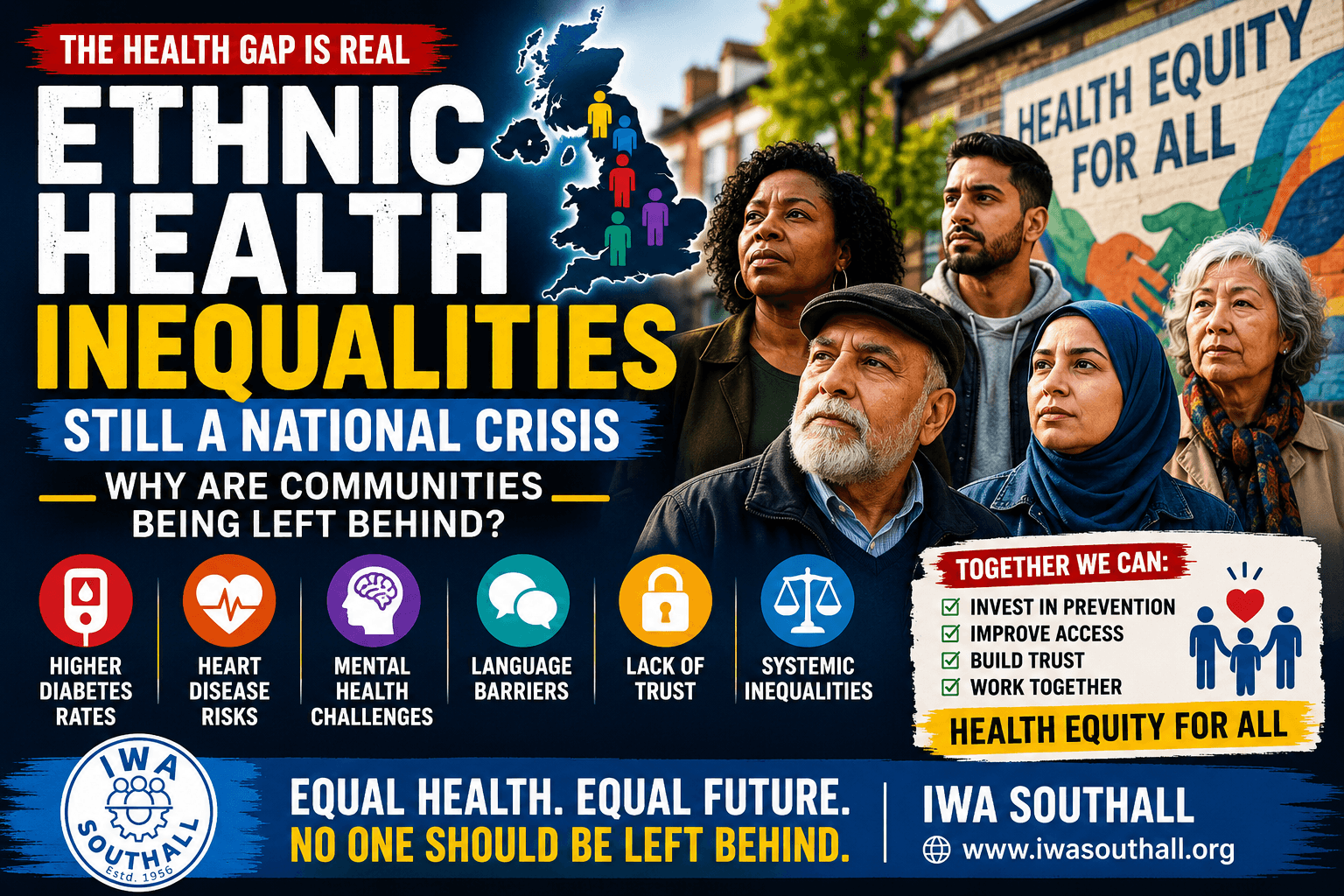
The pandemic exposed deep health disparities across the country. Life expectancy varies dramatically between affluent and deprived areas, and access to healthcare remains uneven. Environmental factors compound the problem: poorer communities are more likely to live near busy roads, industrial sites or areas with limited green space.
Climate change, too, will not be felt equally. Flooding, heatwaves and pollution will hit hardest in places least equipped to adapt. These are not simply environmental issues; they are questions of justice, affecting those with the fewest resources to respond.
A Moment for Serious Reflection
These inequalities are not inevitable. They are the product of policy choices, economic shifts and long-term underinvestment. Addressing them will require more than slogans. It demands a coherent strategy: investment in early years education, a credible industrial policy, meaningful housing reform, and a commitment to digital and environmental resilience.
Social justice is not an abstract ideal. It is the principle that opportunity should not be rationed by geography, wealth or circumstance. Britain has the capacity to renew itself. But doing so requires acknowledging that the barriers to opportunity have changed—and that the country’s response must change with them.
The long awaited socio -economic duty being brought forward will fail to address structural inequalities.